Coronavirus, popularly known as Covid-19, ravaged the globe from 2019 to 2024, and even now it still affects many people everywhere. According to World Health Organization (WHO), the death toll was estimated to be over 7 million worldwide, leaving a permanent mark on thousands of families. Schools closed down during Covid’s peak, often resorting to remote learning that left children confused, stressed, or not doing work at all. This led to a lack of proper education for many children, as well as a large decrease in mental health.
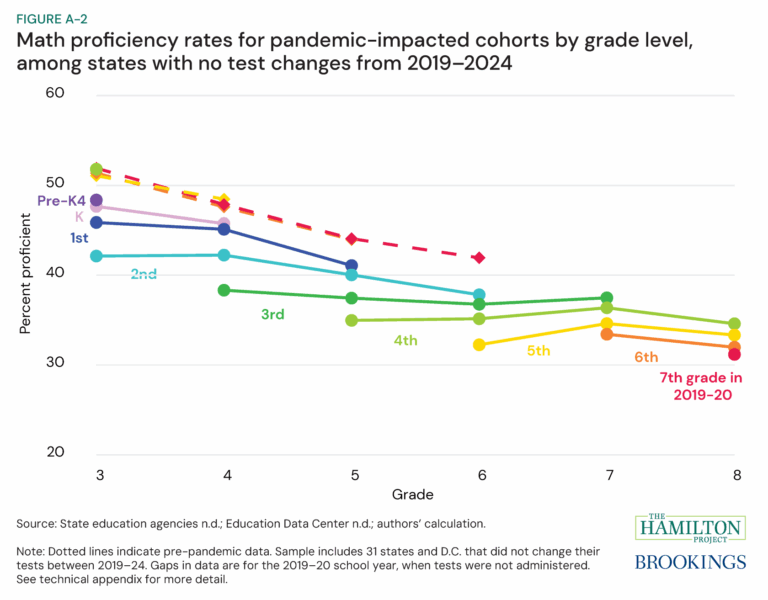
A year after the world’s first closed schools, data from the PPIC showed that only 26% of eighth graders were proficient in math compared to the 33% pre-Covid. Comparatively, there were only 32% of eighth graders proficient in reading, dropping 2% from the 34% it was before the virus. While this drop may not seem like much, those single percentages could be thousands of students who never got the chance to learn as they should have. Furthermore, researchers have found that students who don’t progress past low-level math are 50% more likely to become unemployed after high school. The 7% of students who were robbed of their math education due to Covid now have much less of a chance to find employment, which hurts not only them but the overall economy as well.
Mental health for students took a huge hit during Covid. The feeling of isolation that came with remote learning led to anxiety, depression, and hopelessness. The number of students considering committing suicide was raised by 11.06%, and the number of students who had a persistent feeling of sadness and hopelessness raised by 17%. This led to a 6.1% increase in attempted suicides. These statistics aren’t just sad; they’re horrifying. Being a teenager already comes with its struggles, and adding more to that load could permanently scar the youth of today. The threat of falling sick to Covid, as well as the lack of social interaction, created a crisis for teens’ mental health that didn’t simply disappear when Covid began to recede. Although it has greatly lessened, there is still a way to go before the country heals.
Covid has left a lasting effect on the world, one that isn’t likely to go away any time soon. Test scores are at an all-time low, teen mental health is on the decline, and the future economy is in trouble. That’s why it’s important to act on the matter – if your peers are struggling, help them, whether it be explaining a math problem or being a shoulder to cry on. Don’t sit by if you think someone is thinking of hurting themselves. Instead, tell a trusted adult, whether it be a teacher, councilor, or parent. Do what you can to make a change, no matter how small, because everything counts.
For more resources, visit:
Pandemic Learning Loss and COVID-19: Education Impacts – The Annie E. Casey Foundation
COVID-19 deaths | WHO COVID-19 dashboard
The Coronavirus Spring: The Historic Closing of U.S. Schools (A Timeline)
If you or someone you know is experiencing thoughts of suicide or self-harm, please use the following resources to access free and confidential 24/7 mental health support:
Georgia Crisis and Access Line:1-800-715-4225
National Suicide Prevention & Crisis Hotline: 988 (call or text)